

Exam season can feel like the same loop every time: stress, uncertainty, and late-night cramming. You go to lectures, highlight notes, and reread chapters. But when the exam starts, doubt still shows up. Did you focus on the right topics? Can you remember this under pressure?
According to recent research published in the National Library of Medicine, 68% of students report feeling academic stress, with exam-related anxiety being a primary concern. Traditional study methods also have a blind spot: rereading can make things look familiar, even if you can’t recall them when it counts.
AI-powered mock exams are changing how students prepare for big tests. Instead of guessing what you know, you can practice with exam-style questions under a timer, and then review what to fix next. That shift matters because a Report published by Tricon Infotech shows students who engage with AI-powered practice tools see up to 30% better retention and higher scores compared to traditional methods. When practice feels closer to the real exam, and you get feedback fast, you can study with a clearer plan.
Here are 10 specific ways Studocu AI Mock Exams can support your exam prep and help you feel more confident.
1. Pinpoint Your Knowledge Gaps Before It’s Too Late
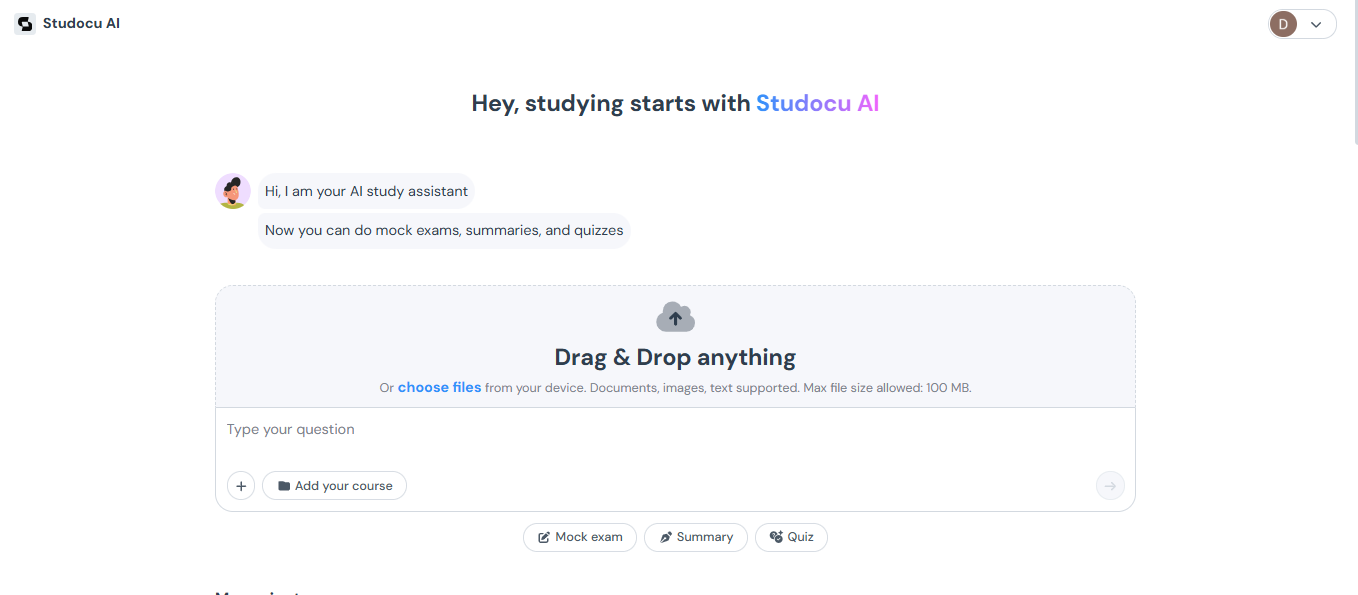
A common trap is thinking you understand something just because it looks familiar in your notes. Mock exams help you see the difference between “I’ve seen this” and “I can actually answer it.” When you take a Studocu AI mock exam, your results and feedback make it easier to spot what you know well and what still needs work.
For example, in a biology final, you might do fine on cell structure questions but struggle with genetics problem-solving. That’s useful information. Instead of reviewing everything again, you can spend your time on the parts that will make the biggest difference.
2. Reduce Exam Anxiety Through Repeated Exposure
Walking into an exam with sweaty palms and racing thoughts can make it harder to show what you know. Practicing with mock exams can help because the format starts to feel familiar. According to a 2025 meta-analytic review by Springer Nature, students who took practice tests showed a significant reduction in test anxiety on average.
When you’ve already handled similar question styles and time pressure in practice, the real exam can feel less overwhelming. You’re not walking in blind. And research suggests practice tests can reduce test anxiety on average, especially when they’re low-stakes and used as learning tools.
3. Strengthen Long-Term Memory Through Active Retrieval
The “testing effect” means something simple: when you try to pull information from memory, you learn it better than when you only reread it. Studies show that testing yourself can improve long-term retention compared with repeated studying. EBSCO summarizes one example where spaced testing led to much higher recall a week later than quick, repeated repetition.
Studocu mock exams support this kind of practice because you’re answering questions, not just looking at highlighted text. That helps the knowledge stick longer, past the night-before cram.
4. Get Adaptive Question Difficulty That Matches Your Level
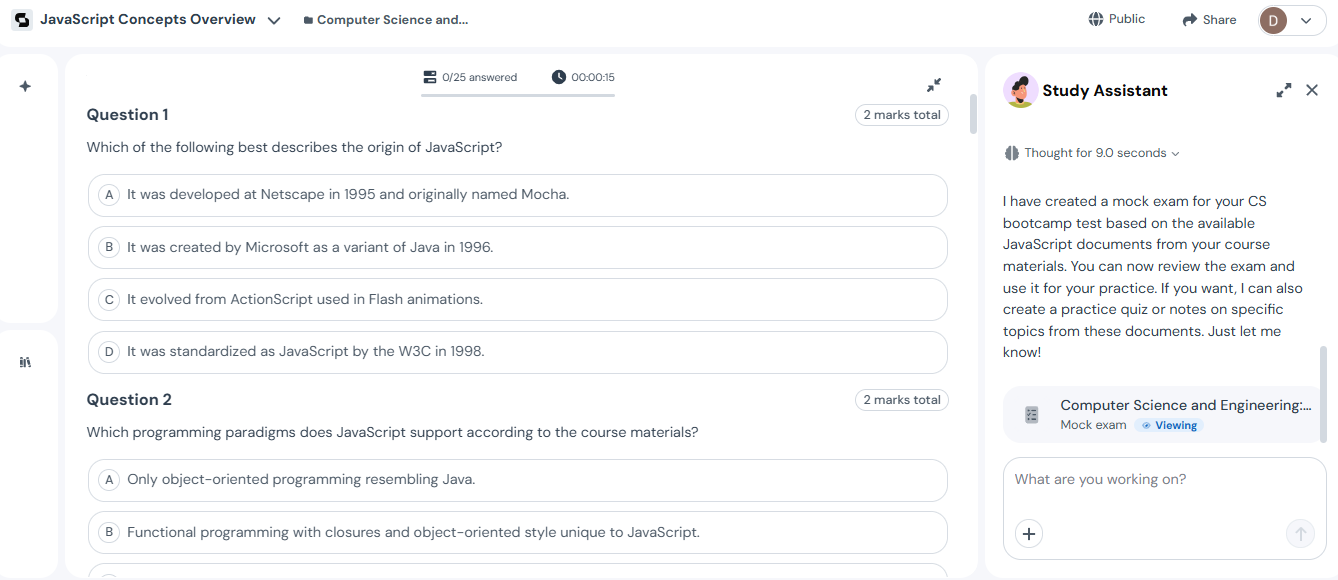
A lot of practice tests feel “one-size-fits-all.” They don’t match what your course focuses on. Studocu Mock Exams works differently because it builds questions from the materials you upload (and, if you choose, documents from Studocu’s library).
That helps your practice feel closer to your actual curriculum. You can also generate multiple mock exams from the same materials, so you keep practicing the same topics with fresh questions. This keeps you challenged without feeling like you’re studying random content that isn’t in your class.
5. Receive Immediate Feedback Instead of Waiting Days
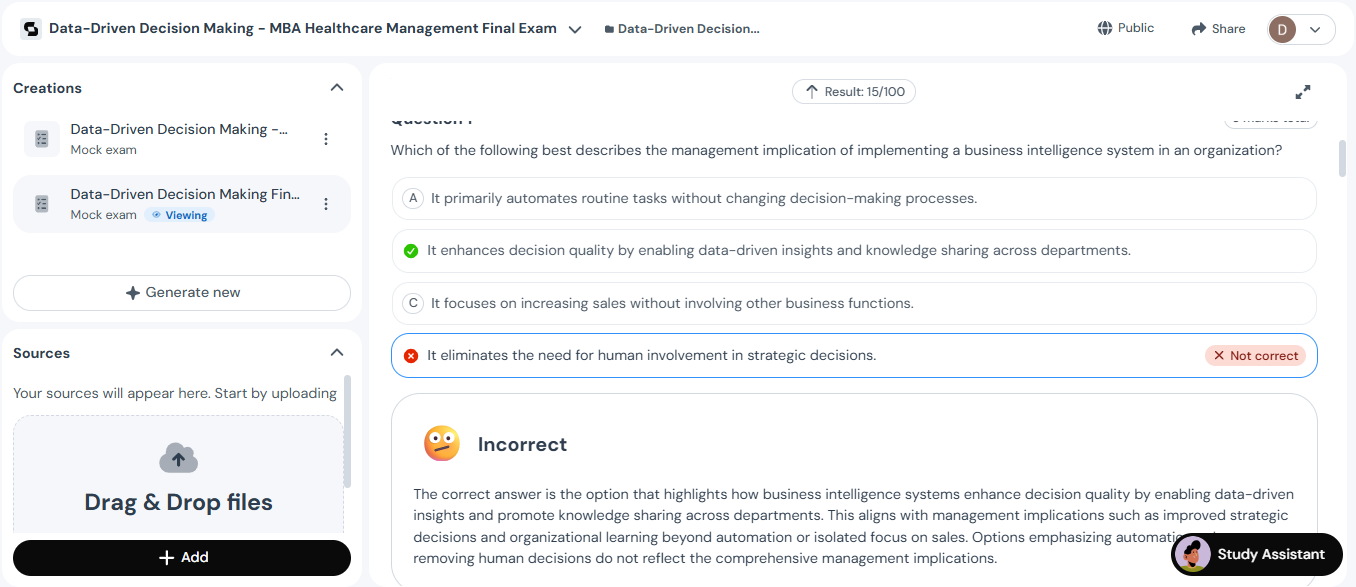
A big problem with traditional practice exams is waiting too long for feedback. You might take a test on Monday and get it back days later, after you’ve already moved on. Studocu Mock Exams gives you your results right away, plus explanations and an “Expected Answer” so you can learn from each question.
Fast feedback helps because you can fix misunderstandings while the topic is still fresh. It also stops small gaps from turning into bigger problems later. Instead of wondering “why was that wrong?”, you can see the reason and adjust your notes or practice again.
6. Simulate Real Exam Conditions to Build Mental Stamina
A two-hour exam is a different challenge from studying in short bursts. You need stamina, pacing, and focus for the full time. You build those skills by practicing under similar conditions, not only by rereading notes.
Studocu Mock Exams uses a timer and point values, so you can practice working under pressure. If your exam is 60 questions in 90 minutes, doing a few timed mock exams trains you to manage the clock and helps you stay sharp even near the end, when fatigue usually hits.
7. Track Progress Over Time With Performance Analytics
One practice test gives you a quick snapshot. But a few mock exams over time can show real progress. Studocu saves each mock exam in your project, so you can review past attempts and compare scores.
That turns “I think I’m improving” into something you can actually see. If you score 65% on your first organic chemistry mock exam and later reach 85%, you have proof that your study plan is working. That kind of evidence can boost confidence and make exam day feel less scary.
8. Practice With Questions Generated From Real Course Materials
Generic practice questions don’t always match your course or the way your professor teaches. Studocu Mock Exams is helpful because you can generate questions from your own lecture slides, notes, and readings, so the practice stays close to your class.
You can also practice from documents uploaded by other students who took the same class, which can give you another explanation or angle on the same topic. For example, if you’re studying international business in Europe, using region-specific materials can keep your practice aligned with what your course actually covers.
9. Identify Patterns in Your Mistakes to Improve Strategy
A score like 70% is useful, but it’s even more helpful to know why you missed certain questions. That’s where feedback matters. With Studocu, you can review which questions were wrong and read the explanation or expected answer.
Over a few mock exams, you can start spotting patterns. Maybe you miss “application” questions more than definition questions. Or maybe you rush near the end and make careless errors. Once you see the pattern, you can adjust your strategy, like slowing down on tricky questions, practicing pacing, or doing more problem-based practice instead of only flashcards.
10. Build Confidence Through Predictive Performance Insights
One of the best parts of mock exams is the confidence you build from your own results. When you take multiple practice exams in realistic conditions, you stop relying on “hope” and start relying on evidence.
If your scores improve from 68% to 85% over two weeks, that’s a clear sign your approach is working. And because practice testing can also reduce test anxiety on average, this kind of progress can help you walk into the exam feeling calmer and more prepared.
The Bottom Line
AI mock exams can turn exam prep into something more active and more focused. Instead of rereading and guessing, you practice answering real questions, review feedback, and repeat. That approach fits what cognitive science says works best: practice testing helps improve long-term retention compared with repeated studying alone.
When you use Studocu Mock Exams, you can generate exam-style practice from your course materials, take it with a timer, get instant results, and save attempts to track progress. Over time, that practice loop can reduce uncertainty, build exam skills, and help you feel genuinely ready, because you’ve already done it in practice.